
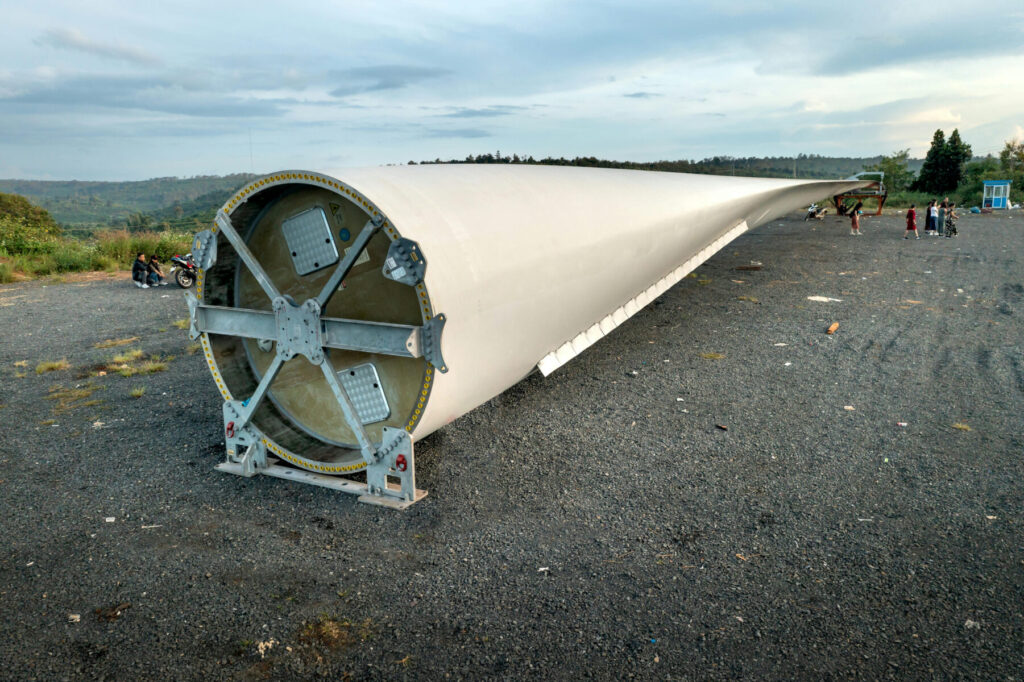
将报废风力叶片转化为可用材料
风能基础设施正在快速扩张, 随着这种增长而来的是新的工业挑战: 处理报废涡轮叶片. Built from high-strength fiberglass and composite materials, these massive structures were engineered for durability, not disposal.
As landfill restrictions tighten and recycling initiatives grow, processors are seeking practical solutions to convert bulky composite blades into reusable material streams. Mechanical size reduction is emerging as the critical first step in that process.
Industrial hammer milling enables efficient breakdown of rigid composite structures into consistent fractions suitable for downstream applications including alternative concrete, construction fillers, and engineered materials.
阅读更多: 风力涡轮叶片回收日益严峻的挑战, 以及为什么加工很重要
材料挑战
Wind turbine blades present unique processing demands:
- Dense fiberglass composite construction
- Abrasive material characteristics
- Large, 不规则的原料
- Layered structural design
这些特性需要能够提供高冲击破碎能量,同时保持可控颗粒尺寸的坚固设备.
为什么尺寸减小至关重要
在复合材料刀片材料能够再利用之前, 必须将其加工成可管理的, 均匀形态. 有效的尺寸缩减:
- 减少运输和存储体积
- 产生一致的颗粒尺寸
- 改善下游混合性能
- 实现与建筑材料的整合
锤磨将刚性刀片部分转变为可预测的原料,为新兴的回收和再利用途径提供支持.
复合材料加工的锤式粉碎机优势
重型锤磨机特别适用于玻璃纤维复合材料的减容,因为它们提供:
- 高能量冲击破碎
- 可调筛网控制以实现目标尺寸
- 连续通量能力
- 耐磨组件以应对磨蚀性材料
Systems can be configured to balance throughput, 耐用, and particle uniformity, critical when processing challenging composite feedstock.
从叶片废料到建筑材料
Once reduced, composite fractions can serve as reinforcement fibers or fillers in alternative concrete and building materials helping divert large-scale waste while supporting innovative material recovery efforts.
Mechanical size reduction bridges dismantling operations and material reuse, making blade recycling scalable and economically viable.
阅读更多: 研磨风力涡轮机叶片: 准备复合材料用于建筑再利用
关键要点——风力涡轮叶片回收
- Wind turbine blades are constructed from durable fiberglass composites that require industrial-grade processing to recycle effectively
- Mechanical size reduction is the critical first step that enables downstream reuse in construction and engineered materials
- Hammer milling delivers the impact energy needed to fracture rigid composite structures into consistent, usable fractions
- Proper equipment configuration supports controlled particle sizing, throughput, and wear management
- Recycling blade material can reduce landfill burden while unlocking new material value streams
让我们联系!
回收的实用解决方案 风力发电机叶片
Mechanical size reduction is emerging as the foundation of scalable wind blade recycling. By transforming rigid composite structures into controlled particle fractions, processors can unlock new pathways for reuse in construction and engineered materials. Download our Wind Turbine Application Sheet to learn more
Schutte锤式粉碎机解决风力叶片回收
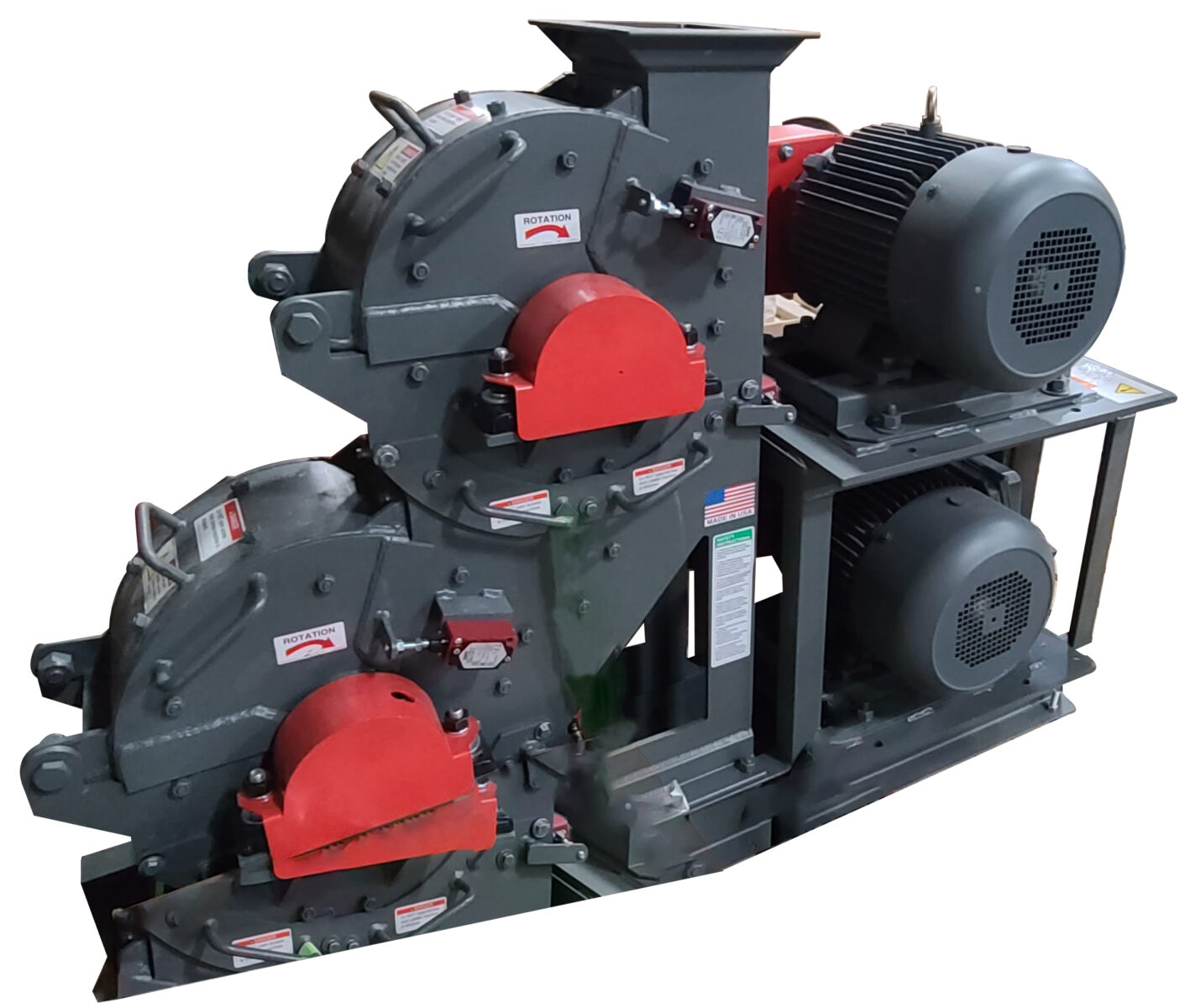
RAS两级锤磨机: Heavy-Duty Composite Reduction
- Designed for high-impact grinding of dense, rigid composite materials
- 坚固的转子组件可实现分层玻璃纤维结构的稳定破碎
- 专为耐磨物料设计的重型机壳和易损件
- 可调节筛网配置可实现受控颗粒尺寸
- 连续运行设计满足工业产量需求
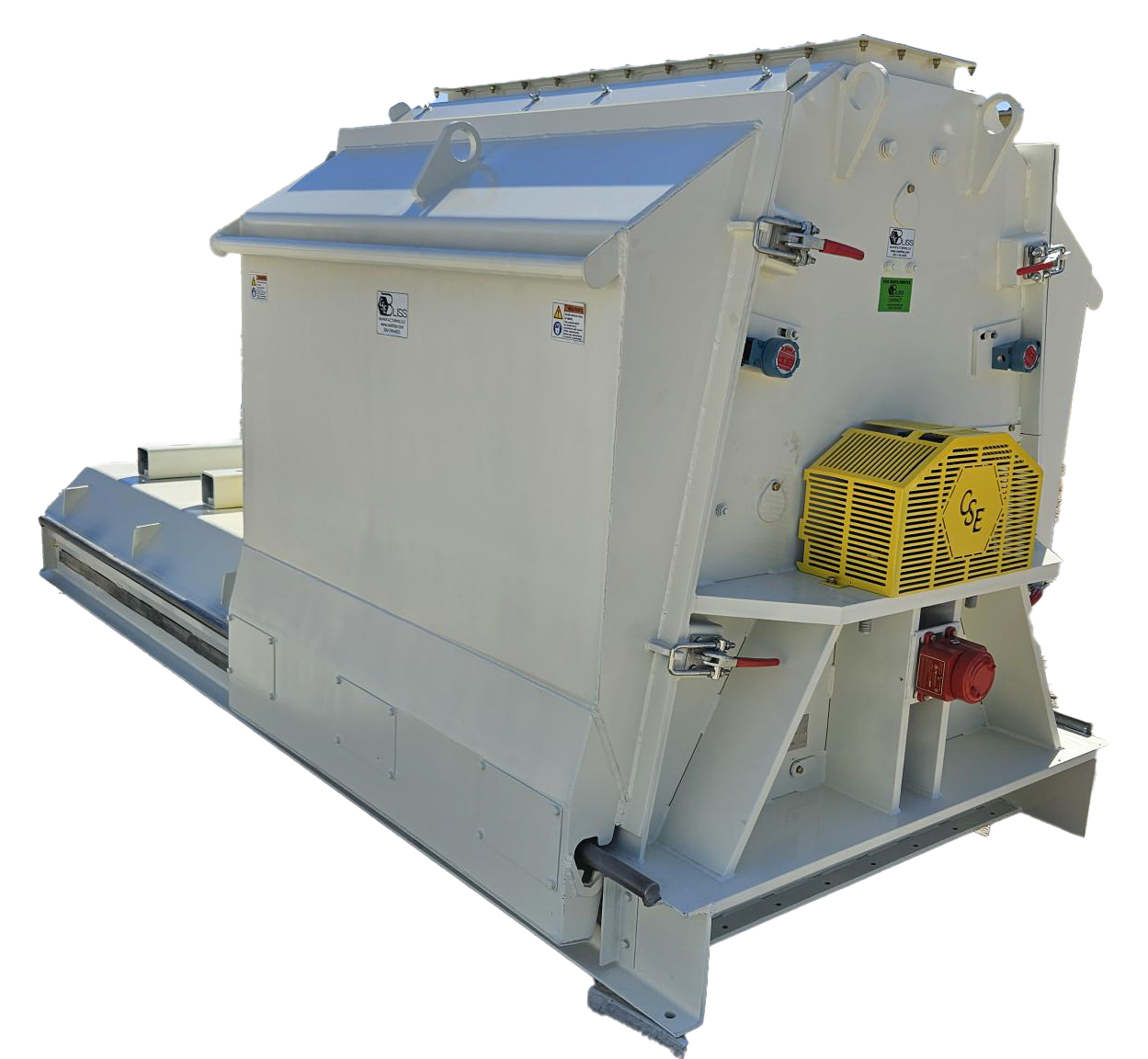
44 全圆系列锤式粉碎机: 可控尺寸减小
- 高效冲击粉碎预分级复合材料
- 下游混料应用的精确颗粒尺寸控制
- 坚固设计可处理玻璃纤维材料
- 适用于二次加工或精加工
- Supports repeatable output consistency for construction reuse
应用支持 & 设备配置
Every processing application is unique. Factors such as feedstock preparation, desired particle size, throughput goals, and wear considerations influence equipment selection and system design.
常见问题解答
Yes — while turbine blades were not originally designed with recycling in mind, growing regulatory pressure and landfill restrictions are driving new recovery pathways. Mechanical size reduction allows composite blade material to be converted into usable fractions for construction applications, engineered fillers, and alternative material blends. Recycling viability depends heavily on proper preprocessing and downstream use.
Wind blades are dense fiberglass composites that cannot be directly incorporated into secondary products. Size reduction breaks down rigid structures into consistent particles that improve handling, blending, and material performance. Without this step, 再利用应用受限且难以扩展.
叶片结构结合了玻璃纤维增强材料和用于结构强度的树脂层. 这会产生磨蚀性, 不规则的原料,不易于传统研磨. 设备必须设计成既能承受磨损,又能提供足够的冲击能量以高效破碎复合材料层.
工业锤磨机非常适合硬质复合材料加工,因为它们施加高能冲击力来破碎层状材料. 适当的配置, 包括转子速度, 锤头设计, 和筛网尺寸, 可使操作人员在加工玻璃纤维复合材料时平衡产量, 颗粒均匀性, 以及耐磨性.
Heavy-duty systems from Schutte Hammermill are designed for demanding size reduction applications and can be customized for abrasive composite feedstock.
Yes — mechanical size reduction systems are designed for continuous industrial operation. With proper system configuration, processors can achieve reliable throughput while maintaining consistent particle sizing and wear management.
The most active area of reuse is construction, where composite fractions can function as fillers or reinforcement in alternative concrete and engineered materials. Research and industrial innovation continue to expand potential end uses.
Every composite processing application is unique. Factors such as blade composition, desired particle size, 处理量要求, and wear expectations influence system design. Application testing and consultation help ensure equipment is properly configured for reliable performance.
与尺寸减小专家交流
If you are exploring wind blade recycling or composite material recovery, our team can help evaluate your application and recommend a processing solution.