
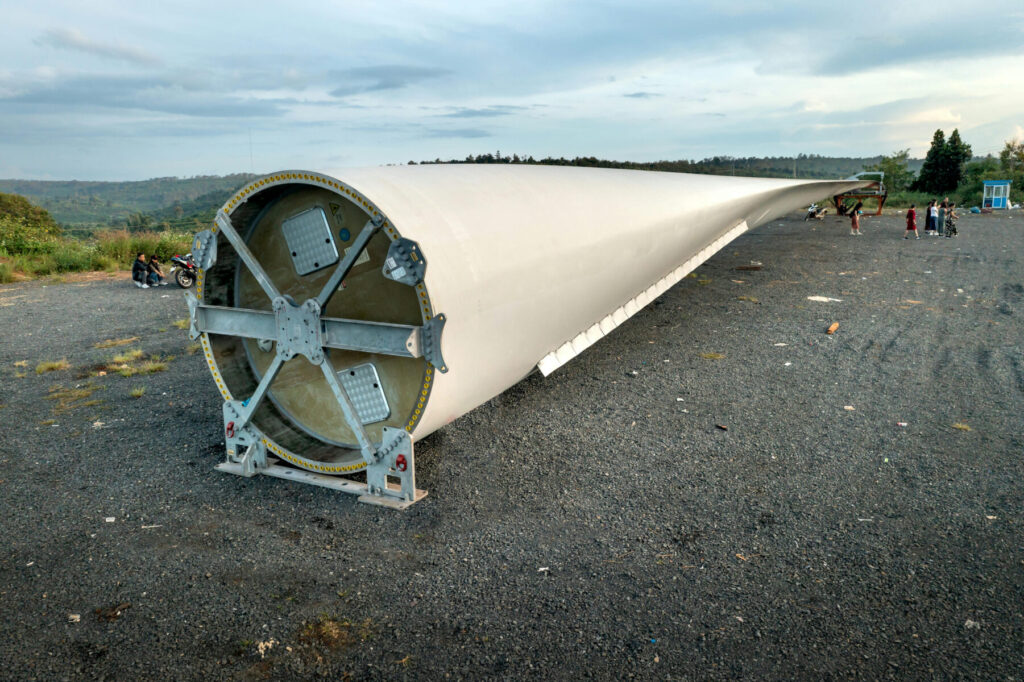
폐기된 풍력 날개를 사용 가능한 재료로 전환
풍력 에너지 인프라가 빠르게 확장되고 있습니다, 그리고 그 성장과 함께 새로운 산업적 과제가 생깁니다: 폐기된 터빈 날개 처리. 고강도 유리섬유 및 복합 재료로 제작, these massive structures were engineered for durability, not disposal.
As landfill restrictions tighten and recycling initiatives grow, processors are seeking practical solutions to convert bulky composite blades into reusable material streams. Mechanical size reduction is emerging as the critical first step in that process.
Industrial hammer milling enables efficient breakdown of rigid composite structures into consistent fractions suitable for downstream applications including alternative concrete, construction fillers, and engineered materials.
더 읽기: 풍력 터빈 블레이드 재활용의 증가하는 도전, 그리고 가공이 중요한 이유
재료 문제
Wind turbine blades present unique processing demands:
- Dense fiberglass composite construction
- Abrasive material characteristics
- Large, irregular feedstock
- Layered structural design
These properties require robust equipment capable of delivering high-impact fracture energy while maintaining controlled particle sizing.
크기 축소가 필수적인 이유
Before composite blade material can be reused, it must be processed into a manageable, uniform form. Effective size reduction:
- Reduces volume for transport and storage
- Produces consistent particle sizing
- Improves downstream blending performance
- Enables integration into construction materials
Hammer milling transforms rigid blade sections into a predictable feedstock that supports emerging recycling and reuse pathways.
복합 재료 가공을 위한 해머 밀 장점
Heavy-duty hammer mills are particularly suited for fiberglass composite reduction because they provide:
- High-energy impact fragmentation
- Adjustable screen control for target sizing
- 지속적인 처리량 능력
- Wear-resistant components for abrasive materials
Systems can be configured to balance throughput, 내구성, and particle uniformity, critical when processing challenging composite feedstock.
날개 폐기물에서 건설 자재로
Once reduced, composite fractions can serve as reinforcement fibers or fillers in alternative concrete and building materials helping divert large-scale waste while supporting innovative material recovery efforts.
Mechanical size reduction bridges dismantling operations and material reuse, making blade recycling scalable and economically viable.
더 읽기: 풍력 터빈 블레이드 연삭: 복합재료 재사용을 위한 준비
핵심 요점 — 풍력 터빈 날개 재활용
- Wind turbine blades are constructed from durable fiberglass composites that require industrial-grade processing to recycle effectively
- Mechanical size reduction is the critical first step that enables downstream reuse in construction and engineered materials
- Hammer milling delivers the impact energy needed to fracture rigid composite structures into consistent, usable fractions
- Proper equipment configuration supports controlled particle sizing, throughput, and wear management
- Recycling blade material can reduce landfill burden while unlocking new material value streams
연락하기!
재활용을 위한 실용적인 솔루션 풍력 터빈 블레이드
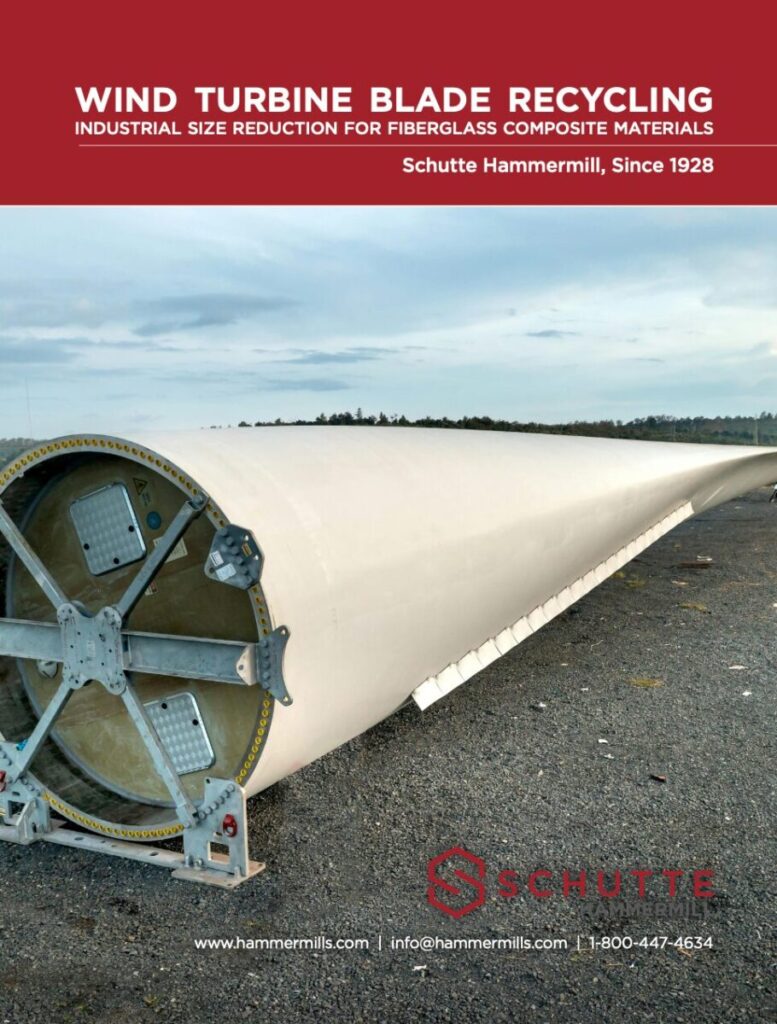
Mechanical size reduction is emerging as the foundation of scalable wind blade recycling. By transforming rigid composite structures into controlled particle fractions, processors can unlock new pathways for reuse in construction and engineered materials. Download our Wind Turbine Application Sheet to learn more
터빈 날개 재활용을 위한 Schutte 해머밀 솔루션
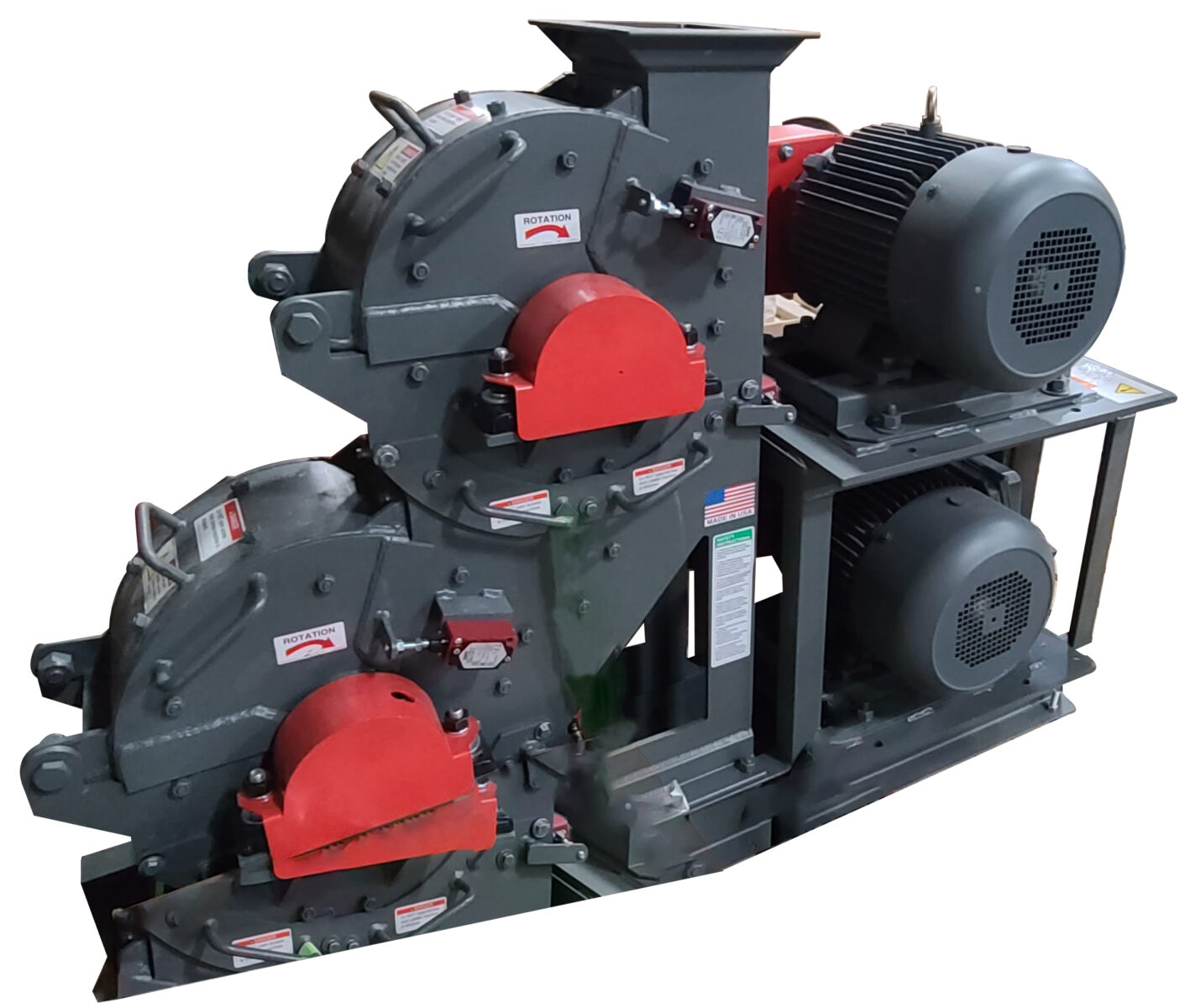
RAS 2단계 해머 밀: Heavy-Duty Composite Reduction
- Designed for high-impact grinding of dense, rigid composite materials
- Robust rotor assembly delivers consistent fracture of layered fiberglass structures
- Heavy-duty housing and wear components built for abrasive feedstock
- Adjustable screen configuration allows controlled particle sizing
- 연속 작동 설계는 산업 처리 능력 요구 사항을 지원합니다
WA 시리즈 해머 밀: 다용도 산업용 분쇄
- 연마 및 불규칙 재료 가공에서 입증된 성능
- 응용 분야별 출력 크기 조절을 위한 유연한 스크린 옵션
- 장기 마모 저항을 위해 설계된 내구성 있는 구조
- 원활한 재료 흐름으로 일관된 공급 처리 지원
- 단계형 블레이드 재활용 시스템에 통합에 적합
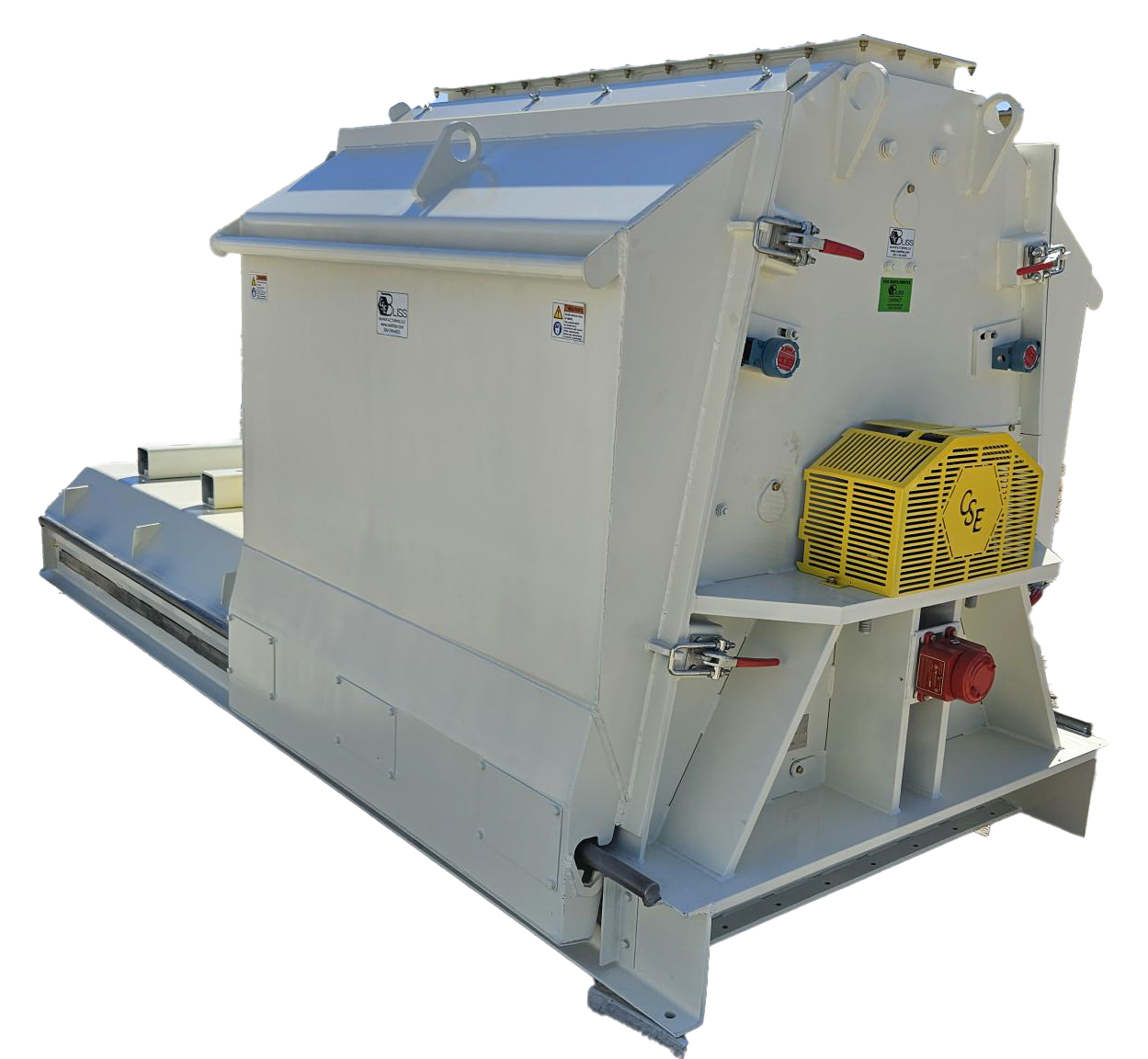
44 시리즈 풀 서클 해머 밀: 제어된 크기 축소
- 사전 크기 조정된 복합 재료 분쇄를 위한 효율적인 충격 분쇄
- 하류 혼합 애플리케이션을 위한 정밀 입자 크기 조절
- 유리섬유를 처리할 수 있는 견고한 설계
- 2차 가공 또는 마무리 과정에 이상적
- 건설 재사용을 위한 반복 가능한 출력 일관성 지원
응용 지원 & 장비 구성
모든 가공 애플리케이션은 고유합니다. 원료 준비와 같은 요소, 원하는 입자 크기, 처리 속도 목표, 마모 고려사항이 장비 선택과 시스템 설계에 영향을 미친다.
자주 묻는 질문
네 — 터빈 블레이드는 원래 재활용을 염두에 두고 설계되지 않았지만, 규제 압력과 매립지 규제가 증가하면서 새로운 회수 경로가 형성되고 있다. 기계적 크기 축소로 복합 블레이드 재료를 건설 용도의 분획으로 전환할 수 있게 한다, 엔지니어링 충전재, 및 대체 재료 혼합물. 재활용 가능성은 적절한 전처리와 후속 사용에 크게 의존한다.
풍력 블레이드는 2차 제품에 직접 통합할 수 없는 고밀도 유리섬유 복합재. Size reduction breaks down rigid structures into consistent particles that improve handling, blending, and material performance. Without this step, reuse applications are limited and difficult to scale.
Blade construction combines fiberglass reinforcement and resin layers designed for structural strength. This creates abrasive, irregular feedstock that resists conventional grinding. Equipment must be engineered to withstand wear while delivering sufficient impact energy to fracture composite layers efficiently.
Industrial hammer mills are well suited for rigid composite processing because they apply high-energy impact forces that fracture layered materials. Proper configuration, including rotor speed, hammer design, and screen sizing, allows operators to balance throughput, particle uniformity, and wear resistance when processing fiberglass composites.
Heavy-duty systems from Schutte Hammermill are designed for demanding size reduction applications and can be customized for abrasive composite feedstock.
Yes — mechanical size reduction systems are designed for continuous industrial operation. With proper system configuration, processors can achieve reliable throughput while maintaining consistent particle sizing and wear management.
The most active area of reuse is construction, where composite fractions can function as fillers or reinforcement in alternative concrete and engineered materials. Research and industrial innovation continue to expand potential end uses.
Every composite processing application is unique. Factors such as blade composition, 원하는 입자 크기, 처리량 요구 사항, and wear expectations influence system design. Application testing and consultation help ensure equipment is properly configured for reliable performance.
크기 축소 전문가와 상담
If you are exploring wind blade recycling or composite material recovery, our team can help evaluate your application and recommend a processing solution.