
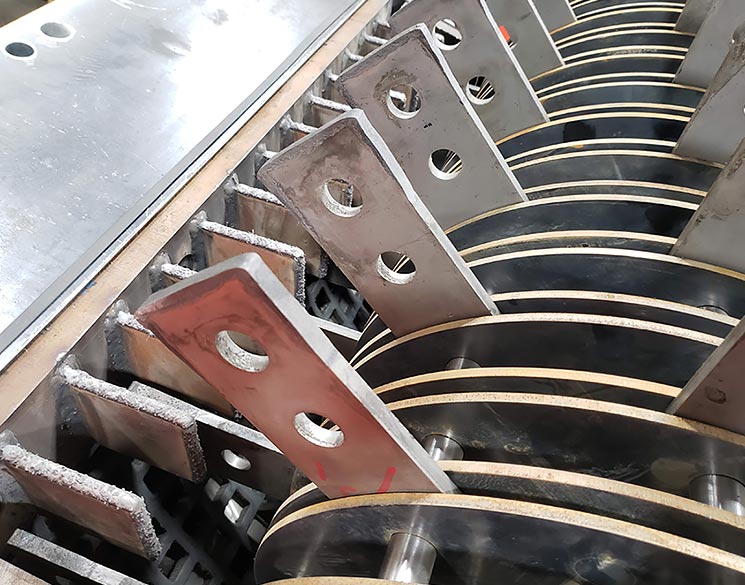
W wielu branżach, od rolnictwa po górnictwo, Młyny młotkowe Schutte pełnią rolę niezastąpionych maszyn roboczych, zdolnych do kruszenia, mielenia, i rozdrabniania materiałów zgodnie z precyzyjnymi specyfikacjami. Jednak, z czasem, w miarę pracy tych maszyn, nieuchronnie dochodzi do zużycia ich komponentów, co prowadzi do spadku wydajności i wydłużenia przestojów operacyjnych. Kluczowe dla utrzymania najwyższej wydajności młyna młotkowego Schutte jest regularna wymiana jego części zużywających się. Przyjrzyjmy się, dlaczego ta praktyka jest tak istotna i jak znacząco zwiększa żywotność oraz efektywność operacyjną twojego młyna młotkowego Schutte.
Zrozumienie dynamiki zużycia
Młyny młotkowe Schutte działają dzięki wykorzystaniu młotków do uderzania, Crush, lub rozdrabniania materiałów, resulting in wear on crucial components. Key wear parts in a Schutte Hammermill typically include:
Młotki: These pivotal elements endure substantial wear due to the high-impact nature of their operation.
Ekrany: Vital for controlling the final particle size of ground material, screens can suffer from clogging, obrażenia, or wear over time.
Łożyska: Essential for supporting rotating components, bearings are prone to deterioration, which can lead to diminished performance and potential machine damage.
Shafts: Responsible for maintaining structural integrity, shafts are susceptible to wear, potentially causing misalignment and reduced efficiency.
The Significance of Wear Parts Replacement
Zwiększona wydajność: Worn-out components can hamper throughput and escalate energy consumption. Replacing these parts can restore hammer mill’s efficiency and uphold productivity levels.
Spójna jakość produktu: Zużyte młotki i sita mogą prowadzić do nierównomiernych wielkości cząstek. Poprzez wymianę tych elementów, zapewniasz stałą jakość produktu.
Minimalizacja Przestojów: Regularna wymiana części zużywających się może zapobiec niespodziewanym awariom, minimalizując przestoje i zakłócenia produkcji.
Oszczędności Finansowe: Inwestowanie w wymianę części zużywających się okazuje się opłacalne w dłuższej perspektywie, ponieważ koszt nowych części jest zazwyczaj niższy niż straty wynikające z obniżonej produktywności i kosztownych napraw.
Bezpieczeństwo i Długowieczność: Zużyte części zagrażają zarówno bezpieczeństwu sprzętu, jak i dobrostanowi operatora. Wymiana zapewnia dalszą bezpieczną eksploatację, jednocześnie wydłużając żywotność młyna.
Określanie Czasu Wymiany
Czas wymiany części zużywających się zależy od czynników takich jak rodzaj materiału, częstotliwość użytkowania, i procedury konserwacyjne. Jednak, inspection and monitoring for signs of wear—such as reduced capacity, diminished product quality, increased power consumption, and visible wear on hammers and screens—aid in determining when replacement is necessary.
In the realm of industrial processing, Schutte Hammermill mills stand as indispensable equipment, with wear part replacement being pivotal for maintaining peak performance. By prioritizing timely and regular maintenance, you can bolster efficiency, elevate product quality, minimalizacji przestojów, zmniejszyć koszty, and uphold the longevity and safety of your hammer mill.
Proactive maintenance is often more cost-effective than reactive repairs or replacements. Uczynienie wymiany części zużywających się kluczowym elementem harmonogramu konserwacji nie tylko zapewnia płynną pracę młyna młotkowego, ale również przyczynia się do ogólnego sukcesu Twoich działań przemysłowych.