
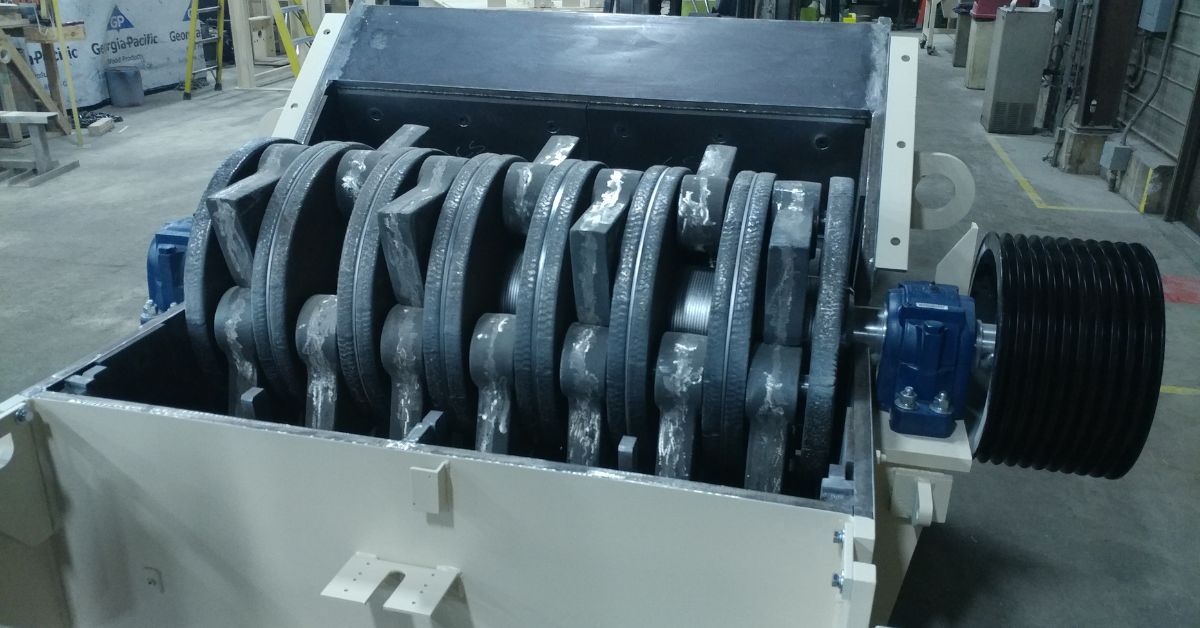
Les concasseurs industriels sont des merveilles d'ingénierie, conçus pour traiter certains des matériaux les plus résistants de la planète. Du béton et de l'asphalte aux roches et aux métaux, ces machines puissantes réduisent des objets massifs à des tailles gérables.
Mais aussi impressionnants soient-ils, il est naturel de se demander s'il existe des limites à ce qu'ils peuvent faire. Que vous soyez curieux de connaître leurs capacités ou que vous dirigiez une entreprise et souhaitiez vous attaquer à l'impossible, cet article répondra à la question: Y a-t-il quelque chose qu'un concasseur industriel ne peut pas broyer?
Types de matériaux que les concasseurs industriels peuvent traiter
Matériaux de construction
Les concasseurs industriels sont particulièrement adaptés à la démolition et au recyclage des matériaux de construction. Ces machines peuvent facilement broyer le béton, briques, asphalte, and other commonly used building materials into smaller, reusable fragments.
This capability is invaluable for construction and demolition projects, as it allows contractors to repurpose waste materials, reducing the need for new resources and minimizing environmental impact. En outre, crushing construction materials helps streamline cleanup operations, making these machines an essential tool in the construction industry.
Natural Materials
From heavy stones to delicate minerals, industrial crushers can tackle natural materials with precision. Rocks, gravel, limestone, and granite are some of the most common natural materials processed by these machines.
When these materials are broken down into smaller sizes, they can be used in applications ranging from road construction to landscaping. Les concasseurs peuvent même traiter les métaux extraits du minerai naturel, jouant un rôle crucial dans les industries minières et de transformation en préparant les matériaux pour un affinage ultérieur.
Déchets industriels
L'accent moderne sur la réduction des déchets et le recyclage a rendu les concasseurs industriels essentiels pour le traitement de diverses formes de déchets industriels. Ils peuvent broyer des objets tels que des ferrailles, déchets électroniques, composants plastiques, et matériaux d'emballage restants en morceaux gérables pour le recyclage ou l'élimination.
Parce qu'ils réduisent considérablement le volume des déchets industriels, les concasseurs aident non seulement les entreprises à économiser sur les coûts de transport et de stockage, mais contribuent également aux efforts de durabilité environnementale grâce à la récupération des ressources réutilisables.
Matériaux organiques
Les concasseurs industriels ne se limitent pas au concassage des matériaux durs, substances inorganiques—ils peuvent également traiter des matériaux organiques plus tendres. Cela inclut des éléments comme le bois, des branches d'arbres, débris agricoles, et même la biomasse. Ces matériaux organiques sont souvent utilisés pour créer du paillis, du compost, ou du biocarburant, soutenant les industries axées sur la durabilité et l'énergie verte.
En décomposant efficacement ces matériaux, les concasseurs facilitent la gestion et la réutilisation des déchets organiques en sous-produits de valeur. Cette polyvalence souligne leur importance dans une gamme d'industries, de l'agriculture à la production d'énergie renouvelable.
Limitations ou défis des concasseurs industriels
Matériaux ultra-durs
Concasser des matériaux ultra-durs présente un défi important pour les concasseurs industriels en raison de la durabilité exceptionnelle et de la résistance de ces substances. Ces matériaux peuvent poser des défis à tous les types de moulins et concasseurs industriels, car leurs composants de coupe ou de broyage peuvent se détériorer rapidement sous une contrainte constante.
Pour y remédier, les fabricants utilisent des technologies avancées telles que des composants renforcés contre l'usure- et résistants à l'abrasion. Ces innovations garantissent que même les matériaux les plus difficiles peuvent être traités efficacement pour un usage industriel.
Matériaux explosifs ou inflammables
Lorsqu'on manipule des matériaux explosifs ou inflammables, il est important de garder à l'esprit que ces matériaux présentent un danger particulier. En effet, le processus de concassage peut générer de la chaleur, de la friction, ou de la pression, ce qui peut déclencher une combustion ou une détonation. Des équipements spécialisés, tels que des systèmes conçus pour le traitement à froid, sont souvent nécessaires pour atténuer ces risques.
En outre, Les fabricants intègrent des dispositifs de sécurité tels que des boîtiers antidéflagrants et des mécanismes d'arrêt automatique pour garantir un fonctionnement sûr. Cette attention particulière permet aux industries de traiter des matériaux dangereux efficacement sans compromettre les normes de sécurité.
Objets trop grands ou de forme irrégulière
Objets trop grands ou de forme irrégulière, comme de gros morceaux de béton armé ou des ferrailles volumineuses, présentent un défi important pour les broyeurs classiques. Pour y remédier, Les broyeurs conçus pour de telles applications sont souvent équipés d'ouvertures d'alimentation surdimensionnées, de mâchoires robustes, et de systèmes hydrauliques capables de résister à de fortes contraintes.
Prétraitement, comme couper ou réduire ces objets à des tailles plus maniables, est une autre approche couramment utilisée. Ces innovations permettent de manipuler efficacement même les matériaux les plus difficiles à gérer, contribuant à l'efficacité des opérations industrielles.
Matériaux élastiques ou flexibles
Traitement de matériaux élastiques ou flexibles, comme le caoutchouc, les plastiques, ou certains textiles, requiert une approche adaptée en raison de leur tendance à se déformer sous pression plutôt qu'à se fracturer. Les broyeurs destinés à ces matériaux intègrent souvent des lames de coupe, des mécanismes de déchiquetage, ou des systèmes spécialisés utilisant la cryogénie contrôlée pour rendre le matériau plus fragile. En outre, Les progrès continus dans la technologie des concasseurs permettent de personnaliser les équipements pour traiter différents degrés d'élasticité, assurant des résultats précis et cohérents.
Limitations ou défis des concasseurs industriels
Les limites résident dans la prise en compte des propriétés et complexités variées des matériaux traités. La dureté et la résistance des matériaux peuvent constituer une limitation significative, comme les substances ultra-dures ou certains alliages industriels haute performance peuvent poser des défis même aux concasseurs les plus avancés. De même, la taille et les dimensions présentent des obstacles; les objets exceptionnellement grands ou de forme irrégulière peuvent nécessiter un pré-traitement. La composition des matériaux ajoute une couche supplémentaire de difficulté, en particulier avec les objets composés de matériaux mixtes – tels que les métaux avec revêtement en caoutchouc ou le béton armé – ce qui peut risquer de boucher ou d'endommager l'équipement pendant l'opération.
En outre, l'usure causée par les substances abrasives pose un défi à long terme. L'exposition prolongée à de tels matériaux accélère la dégradation des composants clés, diminuant progressivement la performance et exigeant un entretien régulier et le remplacement des pièces. Au-delà des défis mécaniques, la sécurité et les préoccupations environnementales sont des considérations critiques. Par exemple, hazardous materials like radioactive or toxic substances require strict handling protocols to prevent harm, while highly flammable items are unsuitable due to the risks posed under intense pressure. Despite these hurdles, there are models that meet these challenges; it’s all a matter of finding the right fit.
If you’re looking to add their versatility and efficiency to your toolkit, trust Schutte Hammermill to supply you with everything you need. We sell a range of hammer mill crushers, parts, and accessories that will ensure your machine can squash any challenges you throw at it.
Chez Schutte Hammermill, we work with our clients to determine the best solution to fit their specific application and processing needs to ensure they have the right mill to meet their specific needs. Our team of experienced engineers and technicians can provide you with personalized recommendations and designs based on your unique processing requirements.